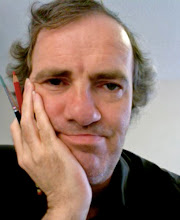
Sunday, March 9, 2025

Going down

Albert Einstein said that time is what is measured by a clock. Along the same lines, a depression can be defined as what is treated by an antidepressant.

When did it start? Had it always been there? Possibly, but I feel that it has worsened over the years. I remember the feeling in high school, like a thick blanket that pressed me down, making it nearly impossible for me to do, to want, to enjoy. The blanket seemed to have lifted somewhat in university, because I thoroughly came to love computer science, but it dropped back right after graduation, heavier than ever, and although its depressing weight varied quite a bit over the past decades, the blanket has always been there.

Over the past few years, the heaviness grew more and more depressing, to the extent where it became unbearable, and it became clear that its weight was too much for me to carry alone. I consulted my family doctor, who referred me to GGZ Centraal, a local branch of mental health care. The intake consult ended with a psychiatrist concluding I needed to do sports, and to get a job. No treatment was needed. I disagreed, and issued a complaint: what I wanted was a diagnosis, to start with.

My complaint was taken seriously, and I was admitted to a diagnostic trajectory, where Beck's Depression Inventory (BDI) established I suffered from mild depression. I found the BDI questionnaire ambiguous at times, but it felt like I finally scored. 

In order to assess the possible role of autism in my depression, autism diagnostics were implemented. I was diagnosed somewhere on the edge of the autism spectrum, something I am still not convinced of, but the psychologist involved agreed to leave it there, without further research or second opinion, as the exact position on the edge of the spectrum is merely academic, with no consequence for diagnosis or treatment. 

Let's talk treatment. I was offered antidepressants, something I am still not wildly enthusiastic about, but neither vortioxetine nor escitalopram did a thing for me. Simple as it may seem, it takes about half a year to work towards a useful dose, and to go back to normal. The good news is that, while I scored no discernible benefit from either of these, I did not suffer from any of the extensive list of side effects either, which made my psychiatrist wonder whether it is depression I am suffering from, or just a melancholy character. The latest insight is that it is both. Yay! After one year of trial and error, I have just started taking nortriptyline, as this currently seems the only approach the psychiatrist can think of.

I took psycho-education for autism, in order to make me understand the condition, which made me doubt even more whether I am in the autism spectrum, and I joined a positive health group, which did even less for me. As for therapy, I am now enrolled in a cognitive behavior therapy, which is supposed to bend my mind towards less depressing traits.

Life is what happens while you are fighting depression, loosely quoting John Lennon. I was born with a schisis, and the treatment back then was not exactly gentle, and in the decades that followed I have had my share of assorted incompetent medical practitioners. Corrupt scientists did their best to make life in academia impossible for me; they succeeded. Last year, my mother passed away, almost 98 years old, and I took up executing her will, which included selling her house, where I had spent the last 12 years as live-in caregiver. This is like cutting the legs from the chair you are sitting on, but I did not care, as I had decided to leave The Netherlands for good. 

However, reviewing the situation made me decide to cancel my future for now, and tackle the depression first. I tried to survive as a homeless person, which did not work out too well, but a kind Lady of Peace offered me shelter for a few weeks, and now I am in a bed and breakfast, for now. What is left is the depression, and it seems to grow heavier.

A number of treatments have been suggested so far. My favorite is finding a strict leather-clad mistress, but it looks like my health insurance is not covering that. Smoking weed may help losing my mind, and other things, and so does electroshock therapy. Guardian angels and other beings of light offered help, but were too commercial for my taste. How about walking to Santiago de Compostella? Finding a job and a home will help on the practical side of things, but will not address depression. Cutting a few throats may offer some relief, and I am willing to provide a list of those deemed 'too much' in the world, but this may cause other practical problems. For now, treatment will be limited to nortriptylene, though it certainly would help if someone detonated a nuclear device in  the Vrije Universiteit in Amsterdam. Just saying.


Monday, February 13, 2023

ISO

Identified Sleeping Object
It is not a cold winter, and yet I was kind enough to hang some fat balls for those in need. Only rarely are they visited by birds, probably because there is ample food in this neighbourhood. It is not a cold winter, after all.

However, despite the absence of manifest visitors, the ball mounted to the wall is obviously getting smaller and smaller, so I wondered who enjoyed it so much? I had considered the possibility of rodents getting to it, but ruled this out, as the ball is 1.5m from the pavement.

Last night, when I went to sleep and took a final look out of the window, the riddle was solved. Something was sitting on top of the fat ball, and as it was not moving, I suspected it was a dead leaf. A dead leaf, indeed, as it did not answer my knocking the window. When I took a closer look, I realised it was a mouse, or even a rat?

The photographer in me woke up to get his rusty old DSLR, which was no mean feat around midnight, only to find it was too dark to get anything done. The window was dirty enough to reduce my flash light to an ugly mist, so I set up my tripod for a really long exposure time, but I was still hampered by not being able to automatically focus, and I trialed and errored it manually. Note to the self: when working from tripod, switch off image stabilisation, as its mechanism interferes with the absence of perceivable movement. I spent about 30 minutes trying to get my best shot, and all this time my model was not moving a hair. I guess is it was asleep, having enjoyed a good snack.

This was not going to work, so I decided to step outside to take a closer shot. I planned to close the door right behind me, to avoid the Tom & Jerry-style gag of the mouse sneaking in and locking me out, shooting me with my own camera. However, right when I returned with the keys, the fat ball was empty. I will keep an eye on it for the next few nights, hoping that sooner or later, I will get a prize-winning picture of this Identified Sleeping Object.

Thursday, April 1, 2021

Ablatio retinae - post scriptum

As Van Langevelde's Law dictates: things get better until they get worse. My eyesight had improved until it reached a plateau, and from there I had more and more problems seeing, and reading in particular. The optometrist concluded this was not a simple case of prescribing a different contact lens, and he sent me back to the oculist, who concluded this was a complication of my surgery of last summer: cataract.

Cataract is a well-understood phenomenon, basically the eye lens getting murky, typically a matter of time, but there are other causes, like, you guessed it retinal surgery. Nowadays, an eye lens can be easily replaced by a crystal-clear artifact, but it is not a simple do-it-yourself effort, so I had to go back into surgery.

From my point of view, the procedure was the same as last summer: my eye was anesthetised through a nasty injection in the eye, which was in turn masked by a light intravenous sedation, the sting of which was masked by an numbing ointment. Last summer, the injection into eye went by unnoticed, possibly because the eye was partly blind, but this time I saw it coming, although I did not feel any pain.

From there, the eye went blind, and I did not feel anything, other than water running across my skin, and things ran smoothly as they are supposed to be. After surgery, a cap was taped over my eye to protect it from outside violence, and I need to wear this cap during sleep for a week. Also, I need to take eye drops for a couple of weeks, and if the eye heals properly, in six weeks or so I can have a new contact lens prescribed. Looks like I survived this one.

Sunday, June 14, 2020

Accio... erm... ablatio retinae!

It started with a little 'dead spot' in my right eye, big enough to make it hard for me to see my own nose. I thought I could deal with that, but the day after, the little spot grew bigger and bigger, until it consumed almost half of my field of vision. I had already decided to contact my family doctor the next day, when my brother in law, a retired doctor himself, urged me to contact the Emergency Ward immediately, as I might have been hit by something nasty.

Things did not look that bad, as the emergency doctor tentatively concluded the symptoms were caused by a minor bleeding in the eye, causing a little cloud of blood in the jelly vitreous humor of the eye to obscure my nose and more. This was going to disappear all by itself, like all bruises do, but he told me to contact my own doctor the day after, just to be sure. This was where things started to derail.

My family doctor hides behind a phone wall to guard himself from Hypochondriacs In All Sizes And Flavors, but is professional enough to provide a phone number for Real Emergencies. You know, anything on the brink of life and death. Modest as ever, I had categorized myself as HIASAF, so I decided to try again next next day to get an appointment. All in all, the blind spot looked like it had started to shrink, the edges were getting transparent and its color had changed from deep red through purple through blue though green, the way all bruises do.

I had more or less expected my doctor to tell me to call back if I could not see my nose in a week or so, but he wanted to see me there and then. Without further ado, he declared me a medical emergency, contacted an eye doctor in a hospital half an hour away, and told me to report there that same morning.

My other brother-in-law was kind enough to drive me there, and we found the hospital was currently in a state of decay. Because of the Corona state of affairs, it had been rearranged  to keep apart patients as much as possible, which worked like a charm, but it made it next to impossible for me to try and find the eye doctor: we had to try a good four desks.

It went fast from there. The eye doctor needed no more than a few minutes to conclude this was no bleeding. It was a full blown case of my retina having come loose, or 'ablatio retinae' for friends.  In my case, the ceiling of my eye had come down and was now obscuring my view on my nose and everything else. In order to keep things from getting worse, I had to undergo surgery as soon as possible, that is the same day.

I had hoped to return home for a moment to inform the rest of the family, but the highway was thoroughly jammed in a car accident, so after two hours we returned to the hospital unsuccessfully, and I was prepared for surgery.

Preparations opened with a sticker on my right cheek, that is the left one for you, with an arrow pointing to my right eye: this one, please. Over the course of the afternoon they asked me repeatedly for my name, birth date and eye, to make sure they were not going to kill anyone innocent.

My biggest worry for surgery was anything needle. My eye was to be anesthetized by injection (Needle 1) so nasty that I myself had to be anesthetized myself lightly through a roesje, i.e. a light intravenous sedation (Needle 2) which does not really put you asleep. I was given no less than 3 hours to worry about the two, and every now and then a nurse put some drops of something iodine into my right eye, which bites so badly the iodine is precluded by drops that numb the eye.

Needle 1 was camouflaged as much as possible with a ointment to numb the skin, which was applied to both hands, as they had not decided yet where to infuse me. Anyways, it took away most of the sting. I did not really notice the roesje, did not black out, and while I discussed this with the nurse, she smilingly told me that Needle 2 had already been applied. Looks like the anesthetist there is a black-belt Needle Ninja!

With all needles over, I was finally able to relax, and the operation was over in half an hour. An air bubble was inserted in my eye to keep the retina in position, and I was given instruction to sleep on my back to make the bubble do its work. A quick check up the day after confirmed that all is looking good, so far.

For the next weeks I need to apply eye drops thrice a day, sleep on my left side, wear an eye cap during the night and be really careful with my right eye. For you, things may look horrible, as my eye looks like it was butchered, and it was. For me, things look good, and I hope vision in my right eye will return when the air bubble dissolves in the next week. I'll keep you updated.

Saturday, April 25, 2020

Mighty oaks

When I pruned some bushes in my mother's garden last year, I realized I knew next to nothing about how green things grow. The victims survived, though, and I managed to do a little better this year.

To further my knowledge in this area, I decided to pick up bonsai, starting from ground zero. So, last September, I gathered thirty-ish acorns to have them germinate. I put some in a bag with moist soil, some went directly in the garden, some in little plastic jars in the shed, and some in jars on the flat kitchen roof.

Some acorns in the bag germinated within weeks, developed centimeters of root , so I planted these in plastic jars, and kept them in the shed. The kitchen roof experiment was abandoned early, as the acorns planted there were stolen by birds, I suspect magpies (if they are reading this: I hope the acorns will rot in your belly).

Not much happened during winter. Every now and then I checked the plastic bag, and planted the acorns that had germinated. As soon as the temperatures started to rise above 15℃, the little jars exploded, and this week I moved the most promising candidates outside, to give them room to develop.

The Dutch have a saying "Boompje groot, plantertje dood", which implies I will probably not live to see these little oaks reaching maturity. However, I might see these growing to bonsaiable proportions in the next fifteen years or so. To be ready when the time is ripe, I will buy some cheap practice material, like Juniperus, from a nursery, to find out how not to approach this.

Looks like I am not the first one to travel the road from acorn to oak. George Bernard Shaw did this before me, and he expressed his experience better than I can:
I took an acorn and put it in a pot.
I then covered it with earth, not a lot.
Great pleasure was mine watching it grow.
The first budding green came ever so slow.
I watered my plant twice a week
I knew I would transplant it down by the creek.
One day it will be a giant oak,
To shield me from the sun a sheltering cloak.
Lovers will carve their initials in the bark,
An arrow through a heart they will leave their mark.
It will shelter those caught in a fine summers rain,
Under its leafy bows joy will be again.
Creatures of the wilds will claim it for their own,
Squirrels will reside here in their own home.
Birds will build nests and raise their young,
They will sing melodies a chorus well sung.
Under it’s branches grass will grow,
Here and there a wild flower it’s head will show.
My oak tree for hundreds of years will live.
Perhaps the most important thing I had to give.

Thursday, December 13, 2018

Shoot!

I don't consider myself an photography aficionado, but I cannot deny I find pleasure in shooting family and whatever crosses my path. In the more than ten years that I own a Canon 350D DSLR I have gathered quite a library of pictures of family, martial arts training and the occasional holiday. So far, there are four pictures precious to me.

A concert of klezmer band Di Gojim, in the Houtmansplantsoen, Gouda (2006).
This one captured the mood of the performance quite well. I was awarded 3rd prize in the photography contest of local newspaper Goudse Post.

Miko of Hisaizu Shrine, Koshigaya, Japan (2006)
Training in the Miko Dojo, when visiting Japan I was determined to shoot a shrine maid, or miko. Tracking the girl with my camera, I had forgotten to switch off my camera's image stabilisation, with disastrous effect. Technically, this one is a failure, but I really like the swirly effect here.
Buddhist temple, Koshigaya, Japan (2006)
 This cat caught my attention, and acted like a model, willing to pose for me.

 Chapel of Marie, Udenhout (2017)
Shot with a long exposure time, this picture froze the interior, leaving the visitors as ghostly passengers. For me, it has a strong association of Mother Marie as a rock in the tide of time, with mortal humans coming and going like waves on the beach.

Saturday, November 17, 2018

Floris!

I was in kindergarten "De Speeldoos" and Floris was my hero. The Dutch Ivanhoe, played by Rutger Hauer, was broadcast on Sunday evenings, and while my mother frowned upon watching television on The Day of The Lord, I was allowed to see it, because my father loved it himself.

I had always thought Floris had returned from the crusades, but when I recently re-watched the show, I found he had traveled the seas with the Portuguese. Anyways, when he returned, he found himself involved in a clash between the duke of Burgundy and Guelders, aka the good guys vs. the bad guys. The bad guys had taken his castle, and it takes more than one season to get it back. Fortunately, Floris is not alone, as he is accompanied by Sindala (or 'Sindelaar', as I heard it as a child), a fakir from India, adept in alchemy, magic and medicine.

Like Floris, I rode a horse, and with my friends, a galloped through the streets, making the 'hooperdehooperdehoop' sounds that real television horses made. And, like Floris, I dreamed of having a castle, and whenever I discovered how a real castle looks like, with diagonally painted shutters, thick walls and, of course, a secret tunnel, I updated my plans of the great castle, to be realized in our garden. My parents must have appreciated my lack of initiative back then, as I don't think a medieval castle, with secret tunnel and everything, in our backyard would have been a good fit.

I will never forget the day that the mistress of our kindergarten came to tell me something bad had happened: she dropped a vase of flowers over my shield, and although it was going to dry, for now it looked like a wet rag. Imagine, for a moment, you are Floris, ready to fight in an important tournament? And then you have to resign because the motherfucking mistress of kindergarten "De Speeldoos" spoils a vase with water over your shield? I admit, the word 'motherfucking' hadn't enriched the Dutch language yet, but you get the idea.

What still fascinates me is how I still remember certain scenes of the show, while I have forgotten most of the story. I do remember a man stretched on the rack, being interrogated by someone pointing a finger saying "Where is the seal", a scary devil in a bottle screaming "Alruin!", a knight concealing his identity by painting his shield, Sindala's alchemy lab and his clever use of a soaked rag as suction cup. I will leave the analysis to a licensed psychiatrist, but I definitely suspect that my early interest in science and magic stems from Floris.

Friday, May 12, 2017

Catweazle has left the game

I must have been 5 or 6 years old when I was introduced to Catweazle, a medieval sorcerer who managed to escape the evil Normans by conjuring himself into our 20th century. That is, he ends up in 20th century Great Britain, where he is charmed by modern magic, like electrickery, until he finally finds a way to return to the good old days.

I definitely was too young to follow the plot in detail, but a few years later I found the books by Richard Carpenter in the library around the corner, and I read them over and over again, and when later the two series were rebroadcast, I loved to watch them again, this time fully appreciating the humor and peculiarities of the Wizard of Saburac (and of Great Britain). This series was built to last! Chances are not very good, but I promise if I ever get a pet toad I will call it Ticker. Or Touchwood. Mayhap.

Yesterday I read the news that Geoffrey Bayldon, the actor who had played Catweazle and without doubt contributed to his popularity, passed at the age of 93. The creator of the series, Richard Carpenter, died in 2012. It must be a sign of the times now I feel this turns a page in history, and their league of creative minds have become extinct. With Catweazle, a curious young boy who loved to dream of magic (and Great Britain) has passed. As Catweazle used to say: nothing works!

Wednesday, April 12, 2017

Call the police! - postpostscript

So I brought my case under the attention of the Public Prosecution Service. It looks like they choose the easy way out: they did not even acknowledge the receipt of my letter, not mentioning the silence that followed. Today I gave it another try, this time using registered mail. Stay tuned.

Postpostpostscript: my registered letter has reached its destination. That is all: it looks like it was ignored.

Post4script: I sent a complaint to the Chief Prosecutor. She acknowledged receipt, and  let me know she would get back to it in six weeks. A couple of days later, the receipt of my registered mail was acknowledged, with a note that the Public Prosecutor Service will look into my case. I suggest you do not hold your breath.

Saturday, March 4, 2017

Let's make Apple Inc. respect consumer rights!

I started a petition to ask attention for Apple not respecting consumer rights worldwide. I would appreciate if you could give this a go, sign the petition and spread the word!

Apple Inc. is violating consumer rights worldwide. While many countries require Apple to guarantee the proper functioning of its products for a period of at least two years, Apple still maintains a limited one year warranty period, and makes its customers believe they need to buy an expensive AppleCare plan, which adds as much as 25% to the already high price of its products. For instance, EU laws grant consumers a free of charge, two-year guarantee, which means that AppleCare effectively adds only one year of coverage, rendering the plan prohibitively expensive.

In addition, Apple rejects claims of guarantee with respect to repairs and parts on products it has chosen to declare 'vintage'. For instance, a consumer claim for a MacBook Pro logic board replacement (EUR 700) which lasted little longer than one year was rejected, for the reason that, by that time, the original MacBook Pro was more than five years old. This is illegal in most countries.
Apple happily provides notes to consumer laws, while, in practice, these laws are rarely respected, if ever, by Apple, its service providers and its resellers. Instead, Apple challenges its customers to sue them if they do not agree, trusting that the bulk of its customers do not have the resources to do so, while local authorities lack the drive to effectively take action.

To sum it up, Apple willfully violates the rights of consumers, leaves them ignorant about their rights, and manipulates its customers and local authorities worldwide into paying prohibitively high prices for its products and services. This must stop now!

(the petition can be found at https://www.change.org/p/tim-cook-make-apple-inc-respect-consumer-rights)

Friday, March 3, 2017

Call the police! - postscript

Two months after filing my complaint on Apple and accomplishes (see Call the police!) I decided to inquired about its status; I did so against my better judgment. The girl who answered the phone did not have the guts to answer me, and muttered about the complexity of the case. The person who handled my case would contact me.

The response came through email. It mainly referred to the standard letter which had reduced my original complaint to civil law, and although the sender of the email was the same girl who had filed my addendum, she conveniently avoided mentioning its existence. When I reminded her about the addendum she jotted down a quick email response. An official letter was obviously too much to ask.

She wrote me that I had accepted the replacement logic board, and should have complained right after the repair. Also, there was no way I could prove that a new logic board would have lasted longer than the patched up version I had received. So, this was not about criminal law, and I better ask attention for this case with the Dutch Consumentenbond or the tv show Tros Radar.

The response not only completely ignores the fact that a limitation period of twelve years applies to fraud, it also suggests that criminal law applies only if it can be proven that the victim was better off if the crime had never been committed. So, I can safely kill my 90-year old mother, as we will never know how many years the Good Lord had had in mind for her, and it is okay to rape a girl, as long as she cannot prove she would have been happier without rapist. This line of reasoning completely and utterly reduces criminal law to civil law, and shifts the burden of proof to the thin shoulders of the victim. In addition, as a sad case of economism it reduces each and every aspect of quality of life to monetary quantity. Also, it shifts the burden of solving cases like this from the police to institutions which are notorious for being only interested in audience ratings and magazine circulations.

It might be that it is just the Emmeloord girls of the police district Flevoland of unit Midden-Nederland who are incompetent, ignorant, lazy and, in one case, rude, but I am afraid these are the symptoms of a broader trend which has kicked off decades ago. It is one of the reasons I believe this country is completely lost.

I will bring this issue under the attention of the Public Prosecution Service, and give them a fair chance to sort this out. I will report about its progress, or lack of it, in this blog.

Thursday, March 2, 2017

Shall I compare thee to a hand grenade?

One of our still lifes in art schools featured a pomegranate. I will never forget the face of my painting teacher when I addressed the fruit as 'a pomegrenade': "A WHAT?".

I had assumed that if it looks like a grenade, is written in Dutch like a grenade, it will be pronounced as such: not. The English 'pomegranate' comes from the Latin 'pomum granatum', or apple with many seeds.

Later I learnt the link between the two was not really far-fetched: in the old days, the explosives were named after the fruit, because they looked the same.  So, if your pomegranate has a pin, throw it directly after you pull it out...

Saturday, February 18, 2017

Of rabbits and ninjas...

It must have been 10 years ago when our Bujinkan Miko Dojo moved its summer training to a nearby park. To communicate this change of location to my fellow ninjas, I taped a note to the front window of the school which had been kind enough to let us use their gym. However, after one week I found the note had been removed.

I restored the note, only to find it removed the week after. It looks like the school was not too keen on blowing its insurgent ninja activity cover. This required firm measures. Ninja measures.

I designed a little sign with an cheeky homage to Dick Bruna's ever-popular Miffy character, or nijntje as she is called in Dutch: "Miffy trains outside". For the rest of summer, the school tolerated my note on its front window.

Dick Bruna has always been known for guarding his little rabbit girl against abuse: he objected to cruel jokes about 'nijn eleven' and 'nijn kampf'. This week he passed away, at the age of 89. I still wonder what his response to my ninja nijntje would have been...

Thursday, February 9, 2017

Happy little poems III

In Nederland - J. Slauerhoff

In Nederland wil ik niet leven,
Men moet er steeds zijn lusten reven,
Ter wille van de goede buren,
Die gretig door elk gaatje gluren.
'k Ga liever leven in de steppen,
Waar men geen last heeft van zijn naasten:
Om ‘t krijschen van mijn lust zal zich geen reiger reppen,
Geen vos zijn tred verhaasten.

In Nederland wil ik niet sterven,
En in de natte grond bederven
Waarop men nimmer heeft geleefd.
Dan blijf ik liever hunkrend zwerven
En kom terecht bij de nomaden.
Mijn landgenooten smaden mij: "Hij is mislukt."
Ja, dat ik hen niet meer kon schaden,
Heeft mij in vrijheid nog te vaak bedrukt.

In Nederland wil ik niet leven,
Men moet er altijd naar iets streven,
Om ‘t welzijn van zijn medemenschen denken.
In het geniep slechts mag men krenken,
Maar niet een facie ranslen dat het knalt,
Alleen omdat die trek mij niet bevalt.
Iemand mishandlen zonder reden
Getuigt van tuchtelooze zeden.

Ik wil niet in die smalle huizen wonen,
Die leelijkheid in steden en in dorpen
Bij duizendtallen heeft geworpen...
Daar loopen allen met een stijve boord
- Uit stijlgevoel niet, om te toonen
Dat men wel weet hoe het behoort -
Des Zondags om elkaar te groeten
De straten door in zwarte stoeten.

In Nederland wil ik niet blijven,
Ik zou dichtgroeien en verstijven.
Het gaat mij daar te kalm, te deftig,
Men spreekt er langzaam, wordt nooit heftig,
En danst nooit op het slappe koord.
Wel worden weerloozen gekweld,
Nooit wordt zoo'n plompe boerenkop gesneld,
En nooit, neen nooit gebeurt een mooie passiemoord.

Wednesday, January 18, 2017

Call the police!

Making someone pay for a new logic board, and installing a patched up oldie instead fits the legal definition of a scam, so I decided to report my problem with Apple to the police.

The front desk officer glanced through my case and decided he did not have time for me, and asked me to make an appointment for a date later that week.

When I returned a few days later, a female officer apologized for the miscommunication, and told me she was not going to file my complaint, as this was a matter of civil law. I explained to her, once more, that taking someone's money for a product which is never installed is a clear case of a scam, so I asked her for the second time to file my complaint. She refused again, this time with the argument I could not prove anything, after which I explained that this is not required for reporting a crime. I asked her a third time to file my complaint, after which she refused, because the prosecutor would dismiss my case anyways. I repeated my arguments but the lady would not budge, so I gave up and went home to prepare further steps.

I learnt that the Dutch police is legally obliged to file a complaint (Code of Criminal Procedure, article 163) and the proper way to handle this is to file a complaint with the police, and to report the issue with the prosecutor's office, so that is what I did. My complaint was responded to by a standard letter and a phone call, and a few weeks later I was invited to report my case.

During my third visit a complaint against MacCity, MicroFix and Apple Inc. was filed, after which I went home with a fancy folder with the report. A few weeks later I received a letter which told me that my case was dismissed, as it was a matter of civil law. When I reread the report, I realized the crux of my case was not worded properly, as it merely suggested the new logic board was non-conform, so I reported once more to the police station to file an addendum.

As usual, the front desk officers did not have time, and this time they were not even willing to make an appointment: I had to contact them through a paid phone number. When I finally got in front of the queue, I got my appointment, and reported to the police for the fifth time.

This time, I was met at the front desk by the lady who had initially refused to file my case. She did not wear her police uniform, and immediately opened fire: she thought I had understood her and found it low that I had filed a complaint against her anyways. I tried to explain I had understood her, but did not agree with her, had asked her three time to file a complaint, that she had refused three times, which was for me a reason to try other channels, but the lady was not really interested in my defense. She barked "THEN YOU SHOULD HAVE SCREAMED: 'DON'T DO THIS TO ME! I DEMAND YOU TO FILE MY COMPLAINT NOW'." I fruitlessly tried to explain this is not my style of arguing, but the woman had already reverted to scream-only mode. I filed my addendum with a colleague of hers, and have not heard of it ever since.

This week, I read that Dutch crime rate is grossly underestimated, because the Dutch are no longer taking the effort to report crime: the bulk of all crimes reported is ignored by the police. It looks like the Dutch police has disintegrated into an introverted organization which is interested in itself only. The future of this country is that of a Mad Max desert where every man solves his own problems. Well, at least this means problems are solved.

Friday, January 13, 2017

Klachtenkompas complaint

I spent a couple of postings about the worrisome state of consumer rights in The Netherlands, and the way Apple cs. makes clever use of this to takes people's money. One of the steps I have not mentioned yet, is registering a complaint with Klachtenkompas, a site of the Consumentenbond.

Klachtenkompas promotes itself as a facility where you can issue a complaint, after which the relevant company takes action to solve your problem. As is often the case, reality is less idyllic: Klachtenkompas simply forwards your complaint, and relays the company's response, if any, back to you. Companies like Apple, which is expert in ignoring customer complaints, typically ignore emails from Klachtenkompas, so you might as well trash the complaint yourself: Klachtenkompas takes no action at all.

I did complain about Klachtenkompas itself, as its website is misleading, but the Consumentenbond, who is all too eager to publicly scold companies for ignoring complaints, remained silent. One employee mentioned that she seemed to remember about revamping the site, and her colleagues might choose to reword the relevant phrases, but she was not clear about a time frame in which things were going to be fixed. Six months after, nothing had changed.

I took it one step further, and registered a complaint with the Stichting Reclame Code (SRC), a Dutch institute which sees to it that commercials and advertisements conform to the rules as recorded in the Nederlandse Reclame Code. The SRC protocol allows the defendant to respond to the complaint, as well as the plaintiff to respond to that response, so the procedure took a while.

The Consumentenbond defended itself by referring to its terms of use, where they state that a successful solution cannot be guaranteed. In my response, I stressed this is a little weak for an organization that has more than once reprimanded companies for hiding aggravating conditions in their small print.

The SRC declared my complaint founded, and advised the Consumentenbond to stop promoting their Klachtenkompas in the contested wording (File 2016/00841 ). Although, the SRC is not authorised to issue a verdict with binding force, or to impose a penalty, its verdicts are usually seen as authoritative.

The Consumentenbond changed the Klachtenkompas site the same day, which lead to user complaints about inaccessible accounts and complaints disappearing. It shows all the signs of a haphazard redesign, with the cheap slogan "Met klachtenkompas sta je sterker" ("You are stronger with klachtenkompas"). It looks tongue-in-cheek but, as far as I can tell, does not break any rules of conduct.


Tuesday, December 13, 2016

My life with Kimon Nicolaides - Epilogue

Having worked myself twice through the bulk of 'The Natural Way to Draw', independently as well as supported by a variety of teachers, I dare say I am entitled to phrase my opinion on this workbook. Yes, the experience was Spartan, and, no, I do not believe it was worth the time and effort. Having spent four years at Max the Mutt, drawing from the model about eight hours a week, sketching on the streets of Toronto at least half an hour daily, I can only admit my drawing skills are basic.

In a nutshell, I believe the problem with Nicolaides is that he was an academic, as opposed to an artist. The art of his hand that has survived the twentieth century lacks the solid observational drawing skills I expect to see from an experienced teacher. It is possible that proof of his draftsmanship is securely locked away from the eye of the aspiring student, but for now I believe his work satisfies the qualification of being 'artsy-fartsy'. Kimon Nicolaides talked the talk; he could not walk the walk.

Of the few things I do agree with, the most pregant is that 'There is only one way to draw, and that is the perfectly natural way', and I do believe Nicolaides was sincerely trying to teach his understanding of this natural way. The same holds for teachers like Andrew Loomis, Michael Mattesi, and Glenn Vilppu, who all teach their view on the matter, each striking chords the others miss. In addition, their teaching job is severely complicated by the fact that students are unique, and a good teacher acknowledges this diversity. This is exactly where Max the Mutt fails, trying to cram its students in the founder's ragged old corset.

What has made Nicolaides' approach so popular over the past one-hundred years is its Spartan approach. It is easy to fall in the same trap as the disciples of  Malcolm Gladwell who believe that 10,000 hours of practice are sufficient to achieving world-class expertise in a field of choice, ignoring the original observation that the "10,000 hours rule" expresses a necessary condition. Just as running for 42 kilometers in the wrong direction does not make one a marathon finalist, completing The Natural Way to Draw does not make one an artist, although it is quite an accomplishment!

Another factor that contributes to the book's popularity is that it provides teachers a detailed curriculum. There is no more thinking about telling students what to do, how to and when to do it: work for three hours according to Schedule 13! Grading is a breeze: just score your students' efforts! Serious teachers will prefer to focus on students progress and skills, as opposed as their shutting up and doing as they are told, but for lazy teachers The Natural Way to Draw is a godsend.

Apart from Kimon Nicolaides being neither effective nor efficient, I believe his approach is not suited for the absolute beginner: I remember the fellow students who got the most out of it had already completed some form of art school, or at least had a solid grasp of the human figure. This is also acknowledged by accomplished illustrator and former Max the Mutt teacher Richard Pace in The Evils of Kimon Nicolaides. I believe there is wisdom in Andrew Loomis' Figure Drawing for all it's worth, where he first introduces human proportions and then presents his students with a simplified manikin as a starting point.

I am looking forward to the opportunity, one Glorious Day, to discuss life drawing with Kimon Nicolaides. I am sure he will agree to include Loomis, Mattesi and Vilppu for a good art class where everything life drawing will come together. For now, in this time and space, I will conclude by paraphrasing the Dutch computer science pioneer E.W. Dijkstra: "Kimon Nicolaides considered harmful."

Thursday, December 8, 2016

My life with Kimon Nicolaides - Part 2

My quest for a unified approach to art education culminated in Operation Switch, and I decided to enroll in Max the Mutt, an animation school which adheres to the teachings of Kimon Nicolaides.

I had been looking forward to go through 'The Natural Way to Draw' for a second time, under the guidance of a knowledgeable teacher, only to find that my teachers were either sticking to one interpretation of the book, or just religiously following its exercises to the letter. My first Max the Mutt teacher made me do gestures blindly, i.e. without looking at the paper, hissing "fasterfasterfaster!" which was a complete disaster for me. My eye-hand coordination has always been bad, and my drawings ended as unintelligible scribblings. It was not until I decided to ignore her that my gestures started to make sense.

She was a believer. I remember she challenged us to show her even one sentence from the book which contained no truth, although she appreciated me pointing to Nicolaides' suggestion to order materials from the Art Student's League of New York, 215 West 57th Street, New York City. Fortunately, every now and then she was able to fill some of the gaps in my understanding of the matter. It was a real eye opener for me to learn that the Blind Contours exercise was all about line quality.

When working myself through the book for the second time, the nagging feeling that the exercises did not really amount to my drawing skills never left me. The enthusiasm of my teacher, who rewarded my efforts with High Passes and, eventually, Honours, made this even worse, as she seemed to mostly award students following directions, while she did not seem to be able to answer most of my questions about the approach.

I am still smiling when I think of her presenting Reverse Poses: we were to draw the model as seen in the mirror. When I asked, confused, where this mirror was supposed to be, she first claimed it did not really matter. When I looked even more confused she added "No no, the mirror is behind you!" and when I looked over my shoulder, she concluded "and you must draw what the model sees in that mirror". When she realized she had just lost the complete group of sixteen students, she told us to draw whatever we wanted to.

Throughout my first year, I was shocked to find how my drawing hand had started a life of its own. Whenever I was stuck in a drawing, usually because of lack of understanding of the pose, the structure of the human body or its anatomy, my right hand started to scribble frantically, as if to compensate for my lack of knowledge. I believe this misperformance was a consequence of my teachers' emphasis on drawing fasterfasterfaster, and of Nicolaides' prioritizing  feelings and intuition over solid skills and knowledge.

I do believe intuition and knowledge are two essential sides of the same medal, not just in art, but also in fields like mathematics and martial arts, and I feel that Nicolaides overly relies on the former. The vagueness of his approach to gestures, line quality and modeling strikes a chord in me, but the lack of solid technique and thorough understanding, as well as ignoring the outcome of the process, makes this intuition fall flat.

Fellow students introduced me to the teachings of Glenn Vilppu, and his thoughtful analysis of the pose, explaining how he guides the eye through the flow of the model presented me a whole new world. This man exactly taught what I found missing in Nicolaides!

My second year at Max the Mutt was a big disappointment when it came to life drawing. The same vague gospel of gesture was repeated over and over, and more emphasis was put on Quick Contours, where I was urged to draw faster in a way that had never worked for me. Seemingly pointless watercolor exercises were added, as well as box forms, modeled after the proportional model of Robert Beverly Hale. I kept working in my sketchbook religiously, and although my teacher seemed to like my work, I left this year with the feeling I had learned nothing.

The third year started well, with a new teacher who did not just talk the talk: he also walked the walk. Geordie Millar never failed to amaze me with his demos of life drawing and anatomy, in addition to being an established animal artist, well-connected to animation industry, having a broad and deep knowledge and experience in art and, overall, being a great guy. He did not so much care about following Nicolaides to the letter, seemed to be more into Vilppu, and breathed the latter's "There are no rules: there are only tools". On top of that, his positive mindset, challenging us to play, was a stark contrast with the negative reinforcement that permeated the school. I slowly felt how things came together, and started to make drawings I actually liked. I have no idea what happened, but Geordie did not last very long. The school's founder replaced him by no one else but herself.

This hard reset sent me back to square zero, with a teacher who barely knew what she was doing. She pragmatically made us repeat the few fragments from The Natural Way to Draw she liked or understood herself, and ignored everything else. In her Advanced Life Drawing course, she still maintained the course was not about making good drawings, categorically skipped the material on design and rhythm, did not want to see Daily Compositions, despite Nicolaides presenting these as the most important exercise of all. In addition to ignoring anything but the first few chapters, she introduced the vague notion of 'contour gesture' she could neither explain, demo or exemplify with course material, and she kept running in circles, stating this was the only way of drawing she could think of, which I believe is true, and that for any examples I was supposed to look at the work of the old masters.

I found some comfort in Andrew Loomis' 'Creative Illustration' which reads "We shall have no examples of Old Masters, for, frankly, what methods and procedures they used is virtually unknown" and concludes in all modesty that "There is but one course open for me if I am to stand with you for whatever value it has. You will thus have the chance to select what is of use to you." For your information, Andrew Loomis (1892-1959) was a renowned American illustrator.

I survived the Max the Mutt life drawing curriculum. My teacher was wildy enthusiastic about my sketchbooks and xeroxed the bulk of it for her archives, but, in all honesty, I have yet to find a single studio representative who shows even a minute interest in my work. So, I discarded my experience with Nicolaides and the Max the Mutt life drawing curriculum as a supreme misfortune where theory outstrips performance, to quote Leonardo once more.


Thursday, November 17, 2016

My life with Kimon Nicolaides - Part I

My next stop was Kimon Nicolaides' The Natural Way to Draw, a classic from 1941 with no less than a Spartan reputation: it guides the aspiring artist through a curriculum of 25 schedules, each of which takes 15 hours to complete. Not discouraged by the cheesy cover blurb that promised it to be "not only the best how-to book on drawing, it is the best how-to book we've seen on any subject", I decided to go for it. As I was unemployed, I had the time to follow Nicolaides to the letter.

I believe Nicolaides is mostly remembered for coining the term 'gesture', meaning the action of the pose. However, he frustrated the living shit out of me with his 'draw not what the thing looks like, not even what it is, but what it is doing', and the examples in the book are not very helpful either. I did follow his directions of drawing 'rapidly and continuously in a ceaseless line, from top to bottom, around and around, without taking the pencil off the paper' without ever feeling I got anything out of it. However, letting the pencil wander around became a habit, which, like so many other habits, started to feel good.

The other directions from the book were not as problematic for me, and with iron discipline I drew myself through the exercises of blind contours, quick contours, modelling in crayon, ink and watercolour, composition, drapery, design and analysis. And yet, even after completing the full working plan, I neither felt nor understood how things came together into a coherent body of skills. The main thing I got out of The Natural Way to Draw was the benefit of drawing every day, but I am confident I would have experienced the same amount of progress, or lack thereof, if I had filled up the pages on my own.

Although the experience was a frustrating one, I did feel some formulae resonating in my mind. The book opens with a Da Vinci quote: "The supreme misfortune is when theory outstrips performance" and I cannot even begin to explain how much I agree, both from my past life in computer science and my attempts to study art; however, it was exactly this misfortune I felt having completed the Nicolaides work plan. Another tidbit is "The sooner you make your first five thousand mistakes, the sooner you will be able to correct them". Nicolaides kept bugging me...

The more I think about it, the more I see this as the weakness of his approach. I totally agree on emphasising the action of the pose, but doing so without paying attention to structure or proportions makes absolutely no sense to me.

Saturday, November 12, 2016

My life with Kimon Nicolaides - Prologue

When I got interested in art, around the turn of the century, I marveled at a whole new world of dots, lines, values and colours. After an introductory course at De Werkschuit in Gouda, I choose to paint in acrylics, and joined courses of life drawing and portraiture at the same art centre and, later at the Vrije Academie and Adelbert Foppe's tekenstudio, both in Den Haag.

The more I drew, the more I found myself running in circles. The courses all boiled down to the same idea of carefully looking, and drawing what you see, without any underlying system. My drawings felt flat, and I wondered whether I would ever be able to draw from life. That is, draw people walking, talking, living, as opposed to carefully copying a patiently posing model. Also, while I did study anatomy, I was clueless about integrating my knowledge of the human body into my skills. So, I started my quest for a unifying curriculum.

It did not take very long for me to stumble across Betty Edwards' Drawing on the Right Side of the Brain. Although I really liked the exercises and little eye openers, the book did not do a lot more for me than to reiterate what I already understood, i.e. how to map the three dimensions of life to the two dimensions of the artist. I kept searching.