Monday, September 10, 2012

Hat trick - finale

Years went by, and I passed through a series of jobs in information technology, with less and less enthusiasm. The applications of computer science had never excited me.

The story of the Wise Men had already been forgotten, and Knowledge-based systems were no longer hot and sexy. Jan Treur's Artficial Intelligence group had quietly moving into the next biggest thing: Agent Systems, without too many people realising that the contribution to the field of knowledge-based systems had been minimal, from a theoretical, practical, scientific or any other point of view. In fact, the old papers on knowledge-based systems were reused, and sold again as new results on agent technology, which was not too surprising, given their overall vagueness. To be honest, I did not really care, until a former colleague brought the following to my attention:
Brazier, F.M.T and Treur, J., Compositional Modelling of Reflective Agents; Intl. Journal of Human-Computer Studies 50:5 (1999)
The paper is predictable agent systems versions of our earlier paper on logical methods in protocol analysis, and more than 6 pages are literally copied from the original, without proper reference. For Treur, this fits in a long tradition of selling his own results more than once, but for Brazier, this is a pathetic case of stealing research. In both cases, it is plagiarism, or scientific fraud.

Somewhat naieve, I thought the issue would be quickly sorted out through one or two letters to the responsible committee within the Faculty of Sciences of the VU University. However, I had underestimated the clamshell nature of the department.

To cut a long story short, over a period of more than one and a half year, a grand total of 10 professors, including prof. dr. J.W. Klop, director of the Division Mathematics and Computer Science, prof. dr. W Hogervorst, dean of the Faculty of Sciences, and prof. dr. H.E. Bal, chair of the Scientific Council of the department, were involved in this case. Most of them did not seem to really care, and none of them had the guts to openly express their opinion on the problem. I consulted prof. dr. J.A. Bergstra, and he advised me to consult a wise man for a confidential advice that would be binding for all involved. This was a mistake; till the present day I doubt Bergstra's role on this, as he appeared to be more closely involved with Treur than he had admitted.

I feel it is mainly the requirement of confidentiality that does not work in delicate cases like this. Any authority will think twice before publishing an wishy-washy opinion on scientific fraud: there is a reason why court cases are public. Anyways, as soon as I realized the expert chosen, prof. dr. J.-J. Ch. Meyer, had closely collaborated with Treur in the recent past, it was too late. The binding advice consisted of some loosely formulated opinions on the matter, without any conclusion. The wise man wore a black hat.

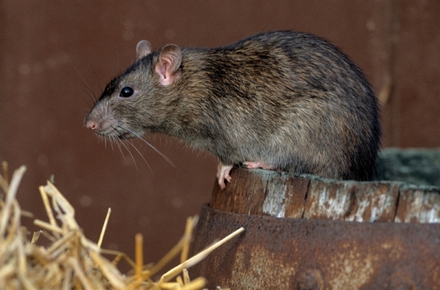
The case of the Wise Men was my main motivation for turning my back on science. In my opinion, modern scientists fall into four categories, which are best summarized in Dutch: "onderzoekers, onderwijzers, ondernemers en onderkruipers". That is: researchers, teachers, enterpreneurs, and rats. Over the past decades, teachers have been quietly replaced by their competitors, and it has become impossible to make a career out of teaching; a sad development pushed forward by a government who believes that science is a short-term investment. Those thriving on this new wave are competitors who know how to play the games of money and media, and while I have no problem at all with scientists who popularize or monetize their research, I do have big issues with the rats who lost the connection with science. 

Issues with modern science are leveraged by the clamshell nature of traditional universities, who are fighting tooth and nail to keep up appearances, covering up cases of scientific misconduct until bubbles burst. Well-known Dutch examples of Anthonie Stolk, René Diekstra, Diederik Stapel, and Dirk Smeesters,  show an introvert culture where scientific fraud pays and is not always easy to expose. I believe it is all too easy to burn a man like Stapel at the stake, with his colleagues, co-authors, employers, PhDs and publishers watching. For more than a decade, the community had loved to hang around with the man with golden hands, ignoring signals that his performance was too good to be true. It takes a community to create a fraud.

The Department of Mathematics and Computer Science proved to be an excellent environment to make scientific career, at the cost of others. The 'Tweede Fase', once intended as a plan to educate young researchers, eventually degenerated into a system that abuses ambitious young researchers as cheap labour forces, kept quiet with empty promises, all too willing to pay with money and energy for the ambitions of those who are a few steps higher on the ladder towards scientific mastership. The Ponzi scheme never worked for me, while it paid the Braziers and Treur of the community called 'science' really well.

Till the present day, this case has never shown up in any of the official reports of the Faculty of Science of the Vrije Universiteit Amsterdam. Taking into account that the issue was reported to the 'Wetenschapscommissie' of the Faculty, it once more confirms my suspicion that effort was taken to cover the whole issue up. The current Faculty of Science seems to be as corrupt as the old Department of Mathematics and Computer Science.

I do not really regret my leaving. After all, I am still wearing my white hat.

Thursday, August 30, 2012

Hat trick - publish or perish

For a couple of years, I loved the job, eating my heart out. I spent most of my time on research, studying the theoretical underpinnings of knowledge-based systems, and discovered the pleasure of teaching, taking a fistful of teaching courses myself, designing a new course for the new AI program, coordinating tests and exams, writing a syllabus, and on top of that I found pleasure in cooperating in the organisation of a workshop, editing proceedings, and the writing of a grant proposal.

All went well. The first couple of papers were accepted for publication, the new course was a success, and the department decided to offer it to all computer science students, the workshop proceedings were being published by Ellis Horwood, and the grant proposal was awarded, leading to a new project being started. And yet, I more and more got the feeling that I was being used.

The official version of the story was that, as an Assistent In Opleiding (AIO), I was woefully inproductive, which implied that I was not fully paid. More precisely, in my first year as AIO I received less than minimum wage, even less than my bursary plus salary from the days when I was a parttime teaching assistent.  It started to nag me more and more that the department never gave me credits for my teaching, and my application for a real job was routinely rejected by the department. Also, when the Ellis Horwood proceedings were published, it became apparent that my supervisor had started a liaison with IBM: as an editor, I had been silently replaced by Thomas Wetter, an IBM researcher.  More than once, colleagues of the Faculteit der Wiskunde en Informatica told me they considered me more a lecturer than an AIO, but, although the compliment felt good, it never translated into career opportunities.

In the meantime, the deeper I delved into the nooks and crannies of knowledge-based systems, the more I realised that much of the research in the Artificial Intelligence group was actually second-rate software engineering, semantics and logic, cleverly repackaged and sold as New, Amazing and Wow. Many people seem to believe that knowledge-based systems are no systems at all: I beg to differ. Attempts from my side to work on hard-boiled logic programming, semantics and temporal logic were sabotaged by my supervisor. The time spent on teaching and organising, and the increasing struggle to push my research through was now wreaking havoc on my planning: the end of my contract was approaching real fast.

The department choose the cheap route, which was not unusual in those days. Instead of offering me an extension, they decided to dump me into unemployment. As a sign of good intentions, I was granted use of my office at the university. I kept doing research for about one year, with less and less enthusiasm. When I asked attention for the issue in a usenet discussion group nl.aio, I realised it was not just my supervisor I had problems with, as my posting was almost immediately removed from the servers by the department's system administrators. A short discussion with a Human Resource manager from the Vrije Universiteit made it clear that the university did not intend to help me finding a job at the university or its hospital as system administrator, database administrator, web designer, scientific programmer or instructor: I had served my purpose as a cheap labour force.

Every now and then, I have to chuckle when I remember that day. Years later, a professor at the Vrije Universiteit invited me to apply for a job as scientific programmer: he told me he was having a hard finding a good candidate. I still believe that Human Resource Management at the Vrije Universiteit is totally incompetent, at the edge of being corrupt. They seem to be more concerned about their position within the organisation, than about providing services to that same organisation.

To wrap it up, I decided to not finish my thesis and I left. I was not the only one: none of my fellow AIOs from Jan Treur's Artificial Intelligence group finished his or her thesis there. I had expected to never look back to my time at the Vrije Universiteit, but it was exactly the story of the wise men that called for my attention, and brought back not-so-good memories.


Saturday, August 25, 2012

Fester for President!

An old professor of mine used to say that the best things are made by a single person who knows what he is doing. I feel this definitely applies to the Fester Fish series of cartoons by my fellow student Aaron Long.

Fester Fish is a somewhat selfish (bwahah), happy and blunt little creature that is so fishy he is almost human. He made it into his own series of cartoons, the most recent of which saw the light this week. The style is fishy best described as retroish 30-ish rubberhose animation, which dates back into a period when cartoons were still done by single animators, continuously kicking a small group of enthusiastic assistents to explore strange new worlds, to seek out new life and new civilizations, to boldly go where no man had gone before.

In those days, cartoons were hand-drawn on paper, inked and painted on cells and shot on camera, time-consuming processes which are now condensed into popular software like Adobe Flash. As a result, Fester's founding father could do without the aforementioned enthusiastic assistants, and he had nobody to kick but himself, and the occasional voice actor, which allowed him to miss his own deadline by no more than a single day.

Apart from the retro style, what I like about the most recent 'Fester Makes Friends' are the curvy background elements, the Droopyesque chase, and the unassuming simplicity of the story. It is especially the latter quality that I find missing in recent blockbusters like 'The Princess and the Frog' and 'Brave' that make me scream in agony: "Come on guys: it's only a story!"

Storytelling seems to have digressed in an almost democratic political process that satisfies a huge committee, including shareholders, the members of which seem to have their own agenda. I believe animation needs more enlightened despots, directors with both a vision and the authority to make that dream come true: Fester for President!


Thursday, August 23, 2012

Hat trick - room service

My job as a PhD student at the Vrije Universiteit started smoothly: I had been offered the position right after graduation. I was given a small office in a quiet corner of the fifth floor, close to the library, at a respectable distant from the class rooms.

The only inconvenience of the place was the fact that there did not seem to exist any key, and the room was completely empty. Despite repeated requests from my side, and promises from the office of the Department of Mathematics and Computer Science, the room remained empty and the key non-existent. I confess that, eventually, I stole furniture from other rooms, and I had an illegal copy of a master key made, to create a workable situation. I was perfectly happy in my little corner, but the situation did not last very long.

The fifth floor was taken from our department, and to be given to another department, so the office was really, really, really sorry, but I had to leave my office, to share an office with a colleague. Now, I had never had any problem with this young man, but scientific research needs focus, and I really needed a place where I could concentrate. To sum it up: it did not work. For about nine months, I spent most of my time in a little corner in the university archive, where I had created a little office space for myself.

Those days, the two powerful facilities of the department's secretary and manager were combined into  the single person of Corry van Rossum (dubbed 'College van Rossum' or even 'Corruptie van Rossum' by some), and on top of that, she was in a relationship with the chair of the department's PhD Committee, prof. P. Holewijn. PhD Confidante Ilse Thomson was part of the same clique, which rendered PhD Students utterly powerless when it came to issuing complaints about this or that.

Not long after I had vacated my office on the fifth floor, a new name appeared on the door that once was mine: Ira Pohl was a good friend of the chair of the department. The floor remained in use by our Department for at least three more years, and while, eventually, I managed to get an office for myself, it became very clear to me that the Department of Mathematics and Computer Science was not just about Mathematics and Computer Science.

Wednesday, August 22, 2012

Hat trick - the long wait

Workshop proceedings are usually published right before the event, and it was a little disappointing to find that EKAW'91 changed course last minute. The proceedings were to be published in Springer's Lecture Notes in AI, but it was decided to postpone publication until after the event, to allow participants to include some of the discussion from the workshop into their papers. Being inexperienced and somewhat naive, I believed every word of the explanation.

Editorial handouts were to be handed out during the workshop in Crieff, but in the end, it was decided to send these through email. Things were getting smelly when I heard a rumour that all submissions had been accepted for publication. This usually means the workshop has a lower status, as well as the resulting proceedings. The only thing that gave me hope, was the fact that the volume would be published in LNAI, which does have a certain status.

The rest was silence. The anticipated editorial notes were never sent, the EKAW'91 organizers did not respond to my emails, and the proceedings did not happen. 

It must have been about one year later when the news spread that there would never be a publication in LNAI. There was no contract with Springer, there had never been a contract and there would never be a contract: a fraud in the organizing committee had been lying about it for more than a year. Another member of the committee took his responsibility and published the volume as a GMD report, which is better than nothing, but it lacks the status of an LNAI volume. So, there it is, my first official publication:
Langevelde, I.A. van and Treur J,  Logical methods in protocol analysis; In: Linster, M and Gaines, B.R. (eds.) Proc. of the European Knowledge Acquisition Workshop - EKAW'91 (GMD Studien Nr. 211), September 1992.
With EKAW'91 I realized for the first time that science is not populated exclusively with knights of truth and reason...

Tuesday, August 21, 2012

Hat trick - smalltalk

The Dutch writer Multatuli once started a letter with the apology that he had not had time to write a short letter, so he had written a long letter. His wisdom very much reminds me of EKAW '91,
the organisers of which were of the openminded sort, which meant that a huge number of researchers was invited to speak for three minutes each. 

Speaking about complicated stuff is not easy, it takes a lot of practice, and most people, including myself, struggle with it forever. As a result, most of the workshop was filled with short high-speed presentations of enthusiastic people who tried to cram the usual 30 minutes into the 3 minutes allowed, twisting their tongues, gasping for air. It was not a pleasant sight. I thought I did not too so bad, until the chairman killed me right after the "In conclusion" of my final sentence.

Fortunately, I managed to turn my defeat into a victory, weeks later. I was invited to give a presentation about the same topic, for an audience of exhausted PhD. students, near the end of a pretty dry seminar that had already lasted for too long. As I had not had time to totally revamp my presentation, I had decided to stick to my short three minute version.

I must have been 4 minutes into the allotted time, when I reached my conclusion. The chairman looked up in shock, the audience rewarded me with the big applause I have ever had. 

I was a wise lesson learned. EKAW '91 totally changed my view on scientific presentations. Had I always had the ambition to tell about my research, after that workshop I focussed on the message of RTFP (Read The Fucking Paper),  presenting right enough material to lure people into my paper. Usually, this works well.

A dire consequence of the decision to cram an awful lot of papers into one workshop, is that the conference proceedings resemble a telephone directory, big enough to be returned to the rain forest in its entirety. It took almost a year to get this sorted out.

Monday, August 20, 2012

Hat trick - the experiment

The motivation for tackling this simple puzzle was that research in knowledge engineering usually involves some informal way of knowledge elicitation, where knowledge from a human expert is made explicit so that it can be formalized into a model. My supervisor thought it would be a good idea to follow this process to the letter.

To this end, a student was invited to solve the puzzle, reasoning loud, with a tape recorder registering the process. It was interesting to find out how the process of explicitly verbalizing the reasoning seemed to interfere with the reasoning itself: once or twice, our subject muttered phrases like "Okay, so suppose I'm wearing a white hat, then... erm... nonono, what did I just say?" Apart from small glitches, the reasoning was in line with my expectations, and the transcript obtained was neatly translated into a logical model, involving meta-level reasoning.

I was proud to find that the resulting paper was accepted by the European Knowledge Acquisition Workshop '91 (EKAW'91), which took place in Crieff, Scotland. For the first time in my life, I was going to travel abroad.