Thursday, February 14, 2013

Dead on arrival

The year made an intense start, with me packing, mailing, giving away or trashing my stuff, trying to make it back to The Netherlands in one piece. I did not work.

For reasons unknown to me, my trusted MacBook Pro died during the trip, according to the Apple Authorized Service Provider it was sent to. As a result, I still have not got a chance to find a new home, and to start up my freelancing business.

For the first time in history, Apple hardware seriously disappoints me. My first Mac Plus ED came from a lot bought by me and several colleagues, under Apple's educational program in 1990. Two machines from the lot were dead on arrival, and were replaced after some discussion. My second Mac was a 7600 from 1996 and served me well for over 6 years, during which I granted it new hard disks, a new processor and lots of memory. The 17" AppleVision monitor that came with it, died after a couple of years, and was replaced under extended warranty. Its Quicksilver G4 successor gave me headaches from day 1, with total freezes every couple of hours. It was replaced after a couple of days and lasted until I sold it in 2008.

In November 2008 I bought this MacBook Pro which had worked like a charm until its sudden death. Two years ago the battery started to swell, and it was replaced under Apple Care. I had hoped that Apple would guarantee me a more or less problem-free ride, but at the moment I am seriously thinking about moving to Windows. I thoroughly hate the design of Windows, and the hardware it usually runs on, but at the moment, I do not feel the quality of Apple hardware warrants the premium price. At the moment, I am waiting to see what Apple says about it. If Apple thinks it is normal that their MacBook Pro lasts no longer than four years, then it is time to move on.

The year 2013 opened with a couple of nasty surprises, like Queen Beatrix of The Netherlands and the Pope resigning. If it is also the year that another Mac enthusiast resigns, then it might as well be the year the world ends. We will see...

Saturday, January 12, 2013

Happy little poems II

België (Het Goede Doel)

Waar kan ik heen.
Ik kan niet naar Duitsland
Kan niet naar Duitsland daar zijn ze zo streng

Waar kan ik heen
Ik kan niet naar Chili
Kan niet naar Chili daar doen ze zo eng

'k Wil niet wonen in Koeweit
Want Koeweit dat is me te heet
En wat Amerika betreft
Dat land bestaat niet echt

Waar kan ik heen
Ik wil niet naar Noord-Ierland
Niet Noord-Ierland daar gaat alles stuk

Waar kan ik heen
Ik kan niet naar China
'k Wil niet naar China dat is met te druk

'k Wil niet wonen in Schotland
Want Schotland dat is me te nat
En de USSR dat gaat me net te ver

Waar kan ik heen
Ik kan niet naar Cuba
'k Wil niet naar Cuba dat is me te zoet

Waar kan ik heen
Ik kan niet naar Polen
'k Wil niet naar Polen daar gaat het te goed

Ik wil niet wonen in Lapland
Want Lapland dat is me te koud
En ik wil weg uit Nederland
Want hier krijg ik het benauwd

Is er leven op Pluto
Kun je dansen op de maan
Is er een plaats tussen de sterren waar ik heen kan gaan

'k Heb getwijfeld over België
Omdat iedereen daar lacht
'k Heb getwijfeld over België
Want dat taaltje is zo zacht
'k Stond zelfs in dubio
Maar ik nam geen enkel risico
'k Heb getwijfeld over België

Is er leven op Pluto
Kun je dansen op de maan
Is er een plaats tussen de sterren waar ik heen kan gaan


Naschrift: België is niet echt een optie, sinds ze ook meedoen aan de euro. Blijven alleen Pluto en de maan over...

Wednesday, January 9, 2013

Happy little poems I

Boutade (P.A. de Genestet)

O land van mest en mist, van vuilen, kouden regen,
Doorsijperd stukske grond, vol killen dauw en damp,
Vol vuns, onpeilbaar slijk en ondoorwaadbre wegen,
Vol jicht en parapluies, vol kiespijn en vol kramp!

O saaie brij-moeras, o erf van overschoenen,
Van kikkers, baggerlui, schoenlappers, moddergoôn,
Van eenden groot en klein, in allerlei fatsoenen,
Ontvang het najaarswee van uw verkouden zoon!

Uw kliemerig klimaat maakt mij het bloed in de aderen
Tot modder; ’k heb geen lied, geen honger, vreugd noch vreê.
Trek overschoenen aan, gewijde grond der Vaderen,
Gij niet op mijn verzoek, ontwoekerd aan de zee.

Thursday, December 27, 2012

Erikos

Disappointing as it may be, after half a year of job hunting, I am still unemployed, so it is time to move back to The Netherlands. Right after graduation, I was quite optimistic, as a fistful of studios had shown interest in my work, but during summer, I realised once more that a Canadian 'Wow' means just as little as a Dutch 'leuk'. That is, most of the studios that had asked me to contact them, did not even respond to my email or phone calls. One the major studios had already told me they were not going to eat through the red tape of supporting me getting a work permit. I appreciate their honesty in this, but in general, the bigger studios have no problem in hiring people, while the smaller studios shy away from the necessary formalities. On top of that, I learnt that it is not always an advantage to be a Max the Mutt graduate, as the reputation of the school seems to be less than stellar.

During the school's Industry Night, I learnt that two of the four 2011 graduates were still unemployed, while one of them seems to be freelancing in his home country; I do not now about number four. So, I was already a little prepared that it would not be so easy to find a job but, of course, I had hoped to do better. Of the seven 2012 graduates, I know that one is working, one is fighting the evil Turks in his homeland Greece and I can only hope he will survive, as he still owes me $2. I spent some time practicing google-fu, but I have not been able to secure a definite status for the others. I wish them good luck.

For now, I will need to find a home in The Netherlands, and hope to start freelancing there, although the emphasis will be more on illustrating than on animating, as the Dutch do not really have an animation tradition. In the meantime, I will keep looking for jobs abroad, preferably out of the euro zone. I am a firm disbeliever in Europe, and am afraid the single Greek who still owes me $2 will be the least of my problems.

Wednesday, October 24, 2012

Hole in one!

There is good news and there is bad news. Two of the three cavities were more like suspect discoloured spots, which need to be monitored to see how they develop. The other one was so superficial that the dentist could treat it without anaesthesia. At least, that is what he expected, but the end of the story was an impressive three-surface restoration, good for a whopping $200, which needed to be anaesthesized anyways. It was a somewhat disappointing case of 'one for the price of three'...

Tuesday, October 9, 2012

A short history of brushing teeth

Once upon a time, life was simple and my mother taught me to brush my teeth by making firm horizontal strokes with a tooth brush. Not long after, in Kindergarten, two cartoon characters Snoeptand and Appeltand (Candytooth and Appletooth) taught me to make little circular movements with the brush, to reach all nooks and crannies of my young teeth. Later, the dentist taught me to move up and down, pressing firmly on the gums. I have seen it all.

About ten years ago, the deplorable state of my teeth forced me to a dental hygienist who asked me to demonstrate my brushing regime, only to respond with a compassionate "Tsk, we haven't done it this way for decades" The newest craze was the Bass method, where the brush is pushed onto the gums at a 45 degree angle, and moved horizontally, supported by triangular toothpicks and tiny little interdental brushes.

My Canadian dentist gave me a Sulcabrush, which is a relatively hard pointy brush to clean teeth where they sink into the gums. Now, this was a marked improvement. Until I started using the Sulcabrush, my gums were bleeding every now and then, but after a few hard days, during which my gums bled daily, they ended finally up in a much better shape, where they were no longer sensitive or bleeding.

Today I paid my dentist another visit, for another lecture on tooth brushing. Horizontal brushing is bad for your enamel. You're supposed to start on the gums with a little vibration, and to finish with a vertical wipe, away from the gums. Looks like I have been abusing my teeth for over ten years, and the session was concluded with the message that a grand total of three cavities need to be treated.

Next trend will probably be diagonal brushing. Mark my words.

Monday, September 10, 2012

Hat trick - finale

Years went by, and I passed through a series of jobs in information technology, with less and less enthusiasm. The applications of computer science had never excited me.

The story of the Wise Men had already been forgotten, and Knowledge-based systems were no longer hot and sexy. Jan Treur's Artficial Intelligence group had quietly moving into the next biggest thing: Agent Systems, without too many people realising that the contribution to the field of knowledge-based systems had been minimal, from a theoretical, practical, scientific or any other point of view. In fact, the old papers on knowledge-based systems were reused, and sold again as new results on agent technology, which was not too surprising, given their overall vagueness. To be honest, I did not really care, until a former colleague brought the following to my attention:
Brazier, F.M.T and Treur, J., Compositional Modelling of Reflective Agents; Intl. Journal of Human-Computer Studies 50:5 (1999)
The paper is predictable agent systems versions of our earlier paper on logical methods in protocol analysis, and more than 6 pages are literally copied from the original, without proper reference. For Treur, this fits in a long tradition of selling his own results more than once, but for Brazier, this is a pathetic case of stealing research. In both cases, it is plagiarism, or scientific fraud.

Somewhat naieve, I thought the issue would be quickly sorted out through one or two letters to the responsible committee within the Faculty of Sciences of the VU University. However, I had underestimated the clamshell nature of the department.

To cut a long story short, over a period of more than one and a half year, a grand total of 10 professors, including prof. dr. J.W. Klop, director of the Division Mathematics and Computer Science, prof. dr. W Hogervorst, dean of the Faculty of Sciences, and prof. dr. H.E. Bal, chair of the Scientific Council of the department, were involved in this case. Most of them did not seem to really care, and none of them had the guts to openly express their opinion on the problem. I consulted prof. dr. J.A. Bergstra, and he advised me to consult a wise man for a confidential advice that would be binding for all involved. This was a mistake; till the present day I doubt Bergstra's role on this, as he appeared to be more closely involved with Treur than he had admitted.

I feel it is mainly the requirement of confidentiality that does not work in delicate cases like this. Any authority will think twice before publishing an wishy-washy opinion on scientific fraud: there is a reason why court cases are public. Anyways, as soon as I realized the expert chosen, prof. dr. J.-J. Ch. Meyer, had closely collaborated with Treur in the recent past, it was too late. The binding advice consisted of some loosely formulated opinions on the matter, without any conclusion. The wise man wore a black hat.

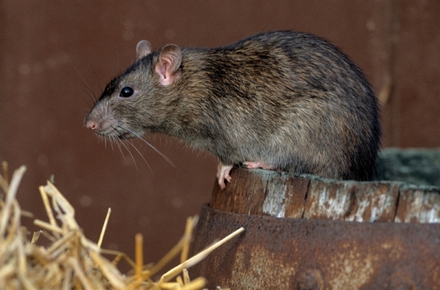
The case of the Wise Men was my main motivation for turning my back on science. In my opinion, modern scientists fall into four categories, which are best summarized in Dutch: "onderzoekers, onderwijzers, ondernemers en onderkruipers". That is: researchers, teachers, enterpreneurs, and rats. Over the past decades, teachers have been quietly replaced by their competitors, and it has become impossible to make a career out of teaching; a sad development pushed forward by a government who believes that science is a short-term investment. Those thriving on this new wave are competitors who know how to play the games of money and media, and while I have no problem at all with scientists who popularize or monetize their research, I do have big issues with the rats who lost the connection with science. 

Issues with modern science are leveraged by the clamshell nature of traditional universities, who are fighting tooth and nail to keep up appearances, covering up cases of scientific misconduct until bubbles burst. Well-known Dutch examples of Anthonie Stolk, René Diekstra, Diederik Stapel, and Dirk Smeesters,  show an introvert culture where scientific fraud pays and is not always easy to expose. I believe it is all too easy to burn a man like Stapel at the stake, with his colleagues, co-authors, employers, PhDs and publishers watching. For more than a decade, the community had loved to hang around with the man with golden hands, ignoring signals that his performance was too good to be true. It takes a community to create a fraud.

The Department of Mathematics and Computer Science proved to be an excellent environment to make scientific career, at the cost of others. The 'Tweede Fase', once intended as a plan to educate young researchers, eventually degenerated into a system that abuses ambitious young researchers as cheap labour forces, kept quiet with empty promises, all too willing to pay with money and energy for the ambitions of those who are a few steps higher on the ladder towards scientific mastership. The Ponzi scheme never worked for me, while it paid the Braziers and Treur of the community called 'science' really well.

Till the present day, this case has never shown up in any of the official reports of the Faculty of Science of the Vrije Universiteit Amsterdam. Taking into account that the issue was reported to the 'Wetenschapscommissie' of the Faculty, it once more confirms my suspicion that effort was taken to cover the whole issue up. The current Faculty of Science seems to be as corrupt as the old Department of Mathematics and Computer Science.

I do not really regret my leaving. After all, I am still wearing my white hat.